
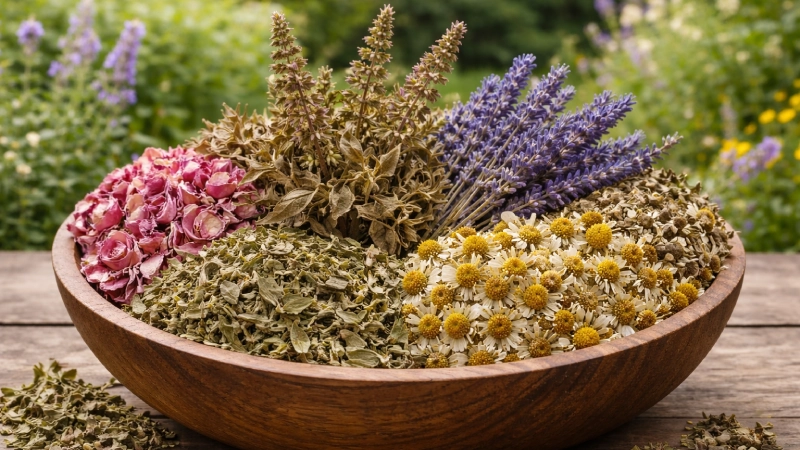
Chronic stress has become an unwelcome companion for many of us. When stress persists, our bodies produce excess cortisol (the primary stress hormone) which can lead to sleep disruptions, anxiety, weakened immunity, and even weight gain. While there's no magic cure for stress, nature offers us powerful allies in the form of adaptogenic and calming herbs that can help restore balance to our nervous systems.
This Stress-Less Tea blend combines five time-honored herbs, each carefully selected for their unique ability to soothe the mind, calm the body, and support healthy cortisol levels. Let me walk you through this nurturing recipe and explain why each botanical ingredient earns its place in your teacup.
The Recipe
Ingredients:
- 1 tablespoon dried rose petals
- 1 tablespoon dried tulsi (holy basil)
- 1 tablespoon dried lavender flowers
- 1 tablespoon dried chamomile flowers
- 1 tablespoon dried lemon balm
- 4 cups hot water (just below boiling, about 200°F)
Instructions:
- Combine all five herbs in a large teapot or heat-safe container.
- Pour 4 cups of hot water over the herb mixture.
- Cover and steep for 10-15 minutes to allow the herbs to fully infuse.
- Strain into your favorite mug and sip slowly, allowing yourself a moment of peace.
- This recipe makes approximately 4 cups, which you can enjoy throughout the day. Store any leftover tea in the refrigerator for up to 24 hours and gently reheat or enjoy cold.
The Herbal Dream Team: Why Each Herb Matters
Rose Petals: The Heart Soother
Rose petals aren't just beautiful, they're remarkably therapeutic. In traditional medicine systems from Ayurveda to Traditional Chinese Medicine, rose has been used to calm emotional upset and soothe a troubled heart. Rose petals contain compounds that have mild sedative effects and can help ease nervous tension. They're also rich in antioxidants, particularly polyphenols, which help combat the oxidative stress that accompanies chronic anxiety. Beyond the physical benefits, the gentle floral aroma of rose has been shown to promote feelings of comfort and emotional well-being, making this herb as much about soul care as stress care.
Tulsi (Holy Basil): The Adaptogenic Powerhouse
Tulsi, also known as holy basil, is considered the queen of adaptogens - herbs that help the body adapt to stress and restore balance. Unlike sweet basil you'd use in cooking, tulsi has been used in Ayurvedic medicine for thousands of years specifically for stress management. Research suggests that tulsi can help normalize cortisol levels, particularly when they're elevated due to chronic stress. It contains compounds like eugenol and rosmarinic acid that have been shown to reduce anxiety and support mental clarity. Tulsi works by modulating the body's stress response system, helping you feel more resilient in the face of daily pressures.
Lavender: The Nervous System Calmer
Lavender's reputation as a calming herb is well-deserved and scientifically supported. The essential oils in lavender flowers, particularly linalool and linalyl acetate, have documented anxiolytic (anxiety-reducing) properties. Studies have shown that lavender can help reduce cortisol levels, improve sleep quality, and ease symptoms of anxiety and restlessness. When consumed as tea, lavender gently calms the nervous system without causing drowsiness during the day, though it certainly supports better sleep when consumed in the evening. Its pleasant floral flavor also makes this stress-relief tea something you'll actually look forward to drinking.
Chamomile: The Gentle Relaxer
Chamomile is perhaps the most well-known calming herb in Western herbalism, and for good reason. This daisy-like flower contains an antioxidant called apigenin that binds to certain receptors in the brain, promoting relaxation and potentially reducing insomnia. Chamomile has been used for centuries to ease nervous tension, soothe digestive upset caused by stress, and promote restful sleep. Research indicates that regular chamomile consumption may help reduce symptoms of generalized anxiety disorder. Its mild, slightly sweet apple-like flavor makes it a perfect base note in any calming tea blend.
Lemon Balm: The Mood Lifter
Lemon balm (Melissa officinalis) rounds out this blend with its ability to ease anxiety while simultaneously lifting mood; a combination that makes it particularly valuable for stress that comes with low spirits. This lemony-scented member of the mint family has been shown in studies to reduce cortisol levels and improve mood and cognitive performance even during stressful situations. Lemon balm contains rosmarinic acid and other compounds that increase GABA (gamma-aminobutyric acid) activity in the brain, promoting feelings of calm. It's also been traditionally used to ease stress-related digestive complaints and tension headaches.
The Synergy of the Blend
While each of these herbs is powerful on its own, they work even better together. This is the principle of synergy in herbalism; different plants support and enhance each other's effects. The adaptogenic properties of tulsi help your body manage stress at its source, while the nervine herbs (lavender, chamomile, lemon balm, and rose) calm your immediate stress response. Together, they address both the root cause and the symptoms of stress, offering comprehensive support for your overtaxed nervous system.
When and How to Enjoy Your Stress-Less Tea
For best results, make this tea a daily ritual. You might enjoy a cup in the morning to set a calm tone for your day, in the afternoon when stress tends to peak, or in the evening as part of your wind-down routine. The act of preparing and mindfully sipping the tea is therapeutic in itself; a small pause that signals to your body and mind that it's time to release tension.
Ready-Made Convenience
If you love the sound of this blend but don't want to source and measure individual herbs, you're in luck. Gordon's Herbals offers a ready-made Stress-Less Tea Blend that contains this exact combination of herbs in perfectly balanced proportions. It's an excellent option for those who want the benefits of this carefully crafted blend without the prep work.
A Gentle Reminder
While herbal teas are generally safe and wonderfully supportive, they're not a replacement for medical treatment. If you're dealing with severe anxiety, chronic stress, or other mental health concerns, please consult with a healthcare provider. These herbs work best as part of a holistic approach to stress management that might also include adequate sleep, regular movement, proper nutrition, and stress-reduction practices like meditation or therapy. That said, taking time each day to nurture yourself with a warm cup of herbal tea is a beautiful act of self-care that can make a genuine difference in how you feel. Here's to calmer days and more peaceful nights—one soothing sip at a time.